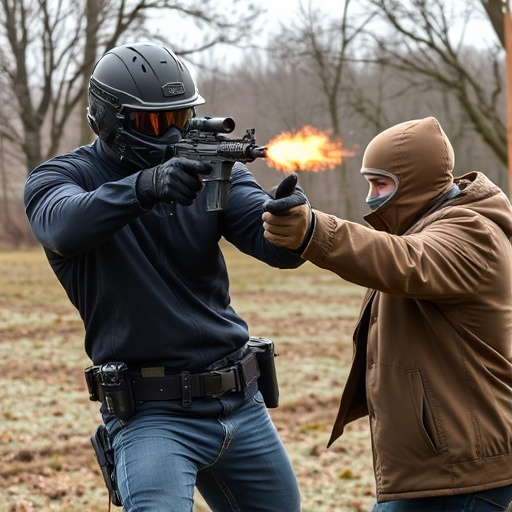
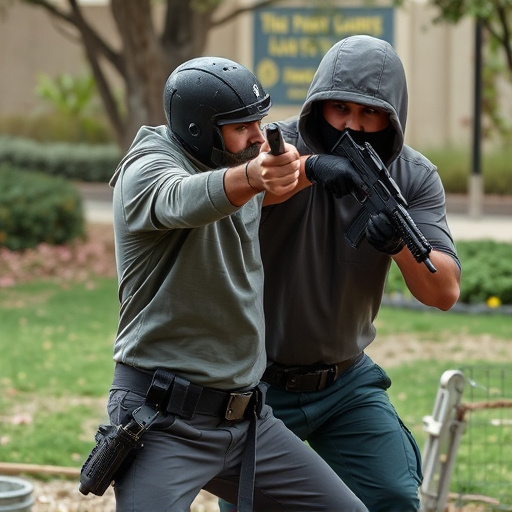
Prevent Accidental Stun Gun Discharge: Master Safety Switches
Stun guns require stringent safety measures to prevent accidental discharge, a leading concern. Adva.......
Read more →
In an era where personal safety is a paramount concern, stun guns have emerged as powerful tools for self-defense. However, with their increasing availability and use, the issue of accidental discharge has become a critical focus. This article delves into the intricate world of preventing accidental stun gun discharges, exploring strategies, technologies, policies, and real-world applications that shape this vital aspect of personal safety equipment. By understanding the complexities and implications, we can ensure that these devices are used effectively while minimizing risks.
Definition: Preventing accidental stun gun discharge (PASGD) encompasses a range of measures aimed at mitigating unintentional activation of stun guns, ensuring their safe handling and use. It involves designing, testing, and educating users to minimize the risk of harm both to the user and bystanders.
Core Components:
Design and Engineering: Stun gun manufacturers play a pivotal role in PASGD through innovative product design. Features such as safety switches, trigger locks, and smart sensors can prevent accidental discharge. For instance, some modern stun guns employ motion sensors that deactivate the device when it's not in use, reducing the risk of unintended activation.
Training and Education: Comprehensive training programs are essential to teaching users proper handling techniques. This includes awareness of the device's safety features, correct grip, and de-activation procedures. Law enforcement agencies and self-defense instructors often conduct such training sessions to ensure responsible use.
User Compliance: Adherence to safety protocols by the user is a critical aspect of PASGD. This involves understanding the weapon's range, safe storage practices, and recognizing potential triggers in various environments.
Historical Context: The need for stricter PASGD measures gained prominence in the late 20th century as stun guns became more widespread. High-profile incidents of accidental discharges led to increased research and development in this field. Over time, international collaborations and regulatory bodies have established guidelines and standards to enhance safety.
The concept of PASGD has a significant global reach, with varying levels of adoption and emphasis across regions:
North America: Known for its robust self-defense culture, the United States leads in stun gun regulations. Many states mandate specific safety features and training for users. Canada follows suit, with provincial regulations focusing on product certification and user education.
Europe: European countries have diverse approaches to PASGD. Some nations require thorough product testing and labeling, while others emphasize user training programs. The EU's comprehensive guidelines ensure consistent safety standards across member states.
Asia-Pacific: This region sees a growing demand for stun guns due to rising personal security concerns. Countries like Australia and Japan have implemented stringent regulations, including mandatory safety features and extensive user testing.
Rest of the World: Developing nations are witnessing an increase in stun gun availability and awareness. International organizations play a crucial role in providing guidelines and fostering knowledge exchange to improve PASGD practices globally.
The economic landscape of PASGD is shaped by several factors:
| Factor | Impact |
|---|---|
| Market Growth: The global stun gun market is expanding, driven by increasing personal safety concerns and law enforcement adoption. According to a 2022 report, the market is projected to reach USD 15.6 billion by 2030, indicating significant potential for growth and investment. | This growth presents opportunities for manufacturers, distributors, and retailers. However, it also demands robust supply chain management and innovative product development to meet safety standards. |
| Investment Patterns: Venture capitalists and private equity firms are showing interest in stun gun technology startups, particularly those focusing on advanced safety features and user-friendly designs. | Such investments stimulate innovation, leading to more sophisticated PASGD solutions. |
| Economic Impact: Accidental discharges can have substantial economic consequences, including medical bills, legal fees, and potential loss of life. Effective PASGD measures can mitigate these risks, benefiting both individuals and society at large. | Governments and businesses can save costs by promoting responsible use and safety education. |
Technological innovations play a pivotal role in enhancing PASGD:
Smart Sensors: Advanced sensors can detect body movements and environmental factors, preventing discharge in inappropriate settings. For instance, motion sensors that deactivate the device when not in use significantly reduce accidental triggers.
Biometric Activation: Integrating biometric technologies like fingerprints or facial recognition ensures only authorized users can activate the stun gun, minimizing unauthorized use.
Wireless Safety Protocols: Bluetooth and WiFi connectivity enable remote monitoring and control of stun guns, allowing users to deactivate devices if lost or stolen.
AI-Powered Training: Artificial intelligence can personalize training programs based on user performance, ensuring better understanding and adherence to safety protocols.
International and national regulatory bodies have established guidelines for PASGD to ensure product safety and user education:
International Organization for Standardization (ISO): ISO 18543 provides standards for the safe design and use of stun devices, including requirements for safety features and testing procedures.
United Nations (UN) Conventions: The UN regulates the international trade of arms, including stun guns, through the Convention on Certain Conventional Weapons (CCW), ensuring responsible transfer and use.
National Regulations: Various countries have implemented specific laws and guidelines:
Implementing effective PASGD strategies has led to positive outcomes in diverse scenarios:
Law Enforcement: Many police departments worldwide equip officers with stun guns for non-lethal force situations. Rigorous training and advanced safety features ensure their responsible use, enhancing officer safety and public trust.
Personal Defense: Individuals using stun guns for self-defense benefit from improved safety measures. For example, a study in the USA revealed that users of stun guns with safety locks reported fewer accidental discharges during training simulations.
Educational Institutions: Schools and universities are adopting stun guns for security purposes, accompanied by comprehensive safety programs. This ensures responsible handling and minimizes risks in high-stress environments.
Despite significant progress, challenges remain in PASGD:
User Education Gap: Ensuring proper training and knowledge transfer to all users, especially in rural or underdeveloped areas, is a continuous challenge.
Technological Complexity: Balancing technological advancements with user-friendliness is crucial. Complex devices might be less accessible to ordinary users.
Global Standardization: Harmonizing international standards and regulations can improve consistency in PASGD practices worldwide.
Future research should focus on:
Q: Are stun guns completely safe if properly used? A: While stun guns are designed for non-lethal force, proper use is essential. Accidental discharges can still cause severe injuries or temporary paralysis.
Q: How can I choose a stun gun with the best safety features? A: Look for devices with advanced motion sensors, safety locks, and biometric activation. Reputable manufacturers adhere to international standards and conduct rigorous testing.
Q: Can training alone prevent accidental discharges? A: Comprehensive training is crucial, but it's not sufficient. Combining education with robust device design and user discipline offers the best protection.
Q: Are stun guns regulated internationally? A: Yes, international organizations like the UN and ISO set guidelines for safety and trade, ensuring responsible use across borders.
Preventing accidental stun gun discharges is a complex yet critical endeavor that combines technology, education, and regulatory frameworks. By addressing these aspects holistically, we can ensure that individuals have access to effective self-defense tools while minimizing risks. As technology advances, continued research and collaboration will be essential to staying ahead in the pursuit of safer personal safety equipment.